
Attention as a Co-Creative and Ethical Act
How you look changes what is there.
Iain McGilchrist argues that attention is not a passive spotlight on a pre-existing world but a co-creative act that shapes reality itself — making how we attend an ethical obligation, not merely a cognitive habit.
Actions
The Source
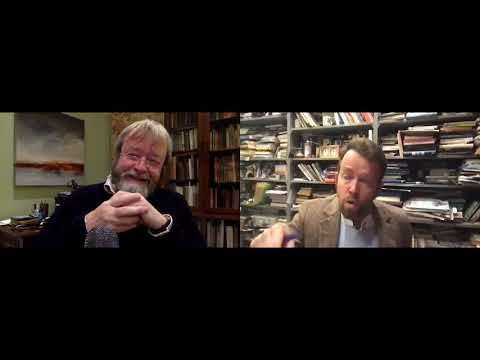
Attention as a moral Act: Iain McGilchrist & Jonathan Rowson in Conversation
The Observer
Hemisphere theory, neuroscience, philosophy of mind — left and right brain as modes of being, the crisis of left-hemisphere dominance, and the nature of consciousness
The Translation
AI-assisted summaryFamiliar terms
McGilchrist's treatment of attention represents a fundamental departure from mainstream cognitive science, which typically frames attention as one information-processing function among many. His claim is ontological, not merely psychological: attention is constitutive of the world we inhabit. The world we know is always already a world shaped by how we attend to it. This position sidesteps both naive realism — the view that reality is indifferent to our knowing — and subjective idealism. Instead, McGilchrist describes a reverberative, co-creative relationship between the attending mind and the attended-to world, a position he finds corroborated by quantum mechanics, where observation is never neutral with respect to what is observed.
The ethical implications follow with logical force. If attention co-creates rather than merely registers reality, then the quality of our attending is not a private cognitive matter but a moral one. The stance of cold analytical detachment, far from yielding a more accurate picture, actively degrades both the world and the perceiver. It forecloses the kind of receptive, embodied perception through which things can presence themselves most fully. McGilchrist thus calls attention a moral act — the nourishing attention that allows reality to disclose itself is not just epistemically superior but constitutes an ethical obligation.
The contemporary fragmentation of attention through digital technologies and cultures of perpetual stimulation therefore represents, in McGilchrist's analysis, not a productivity crisis but a civilizational emergency. If sustained, embodied attention is the medium through which reality comes into being for us, its systematic erosion threatens the loss of the world in a quite literal sense — a collapse not of external objects but of the conditions under which anything can meaningfully appear.