
Attention as Capital: The Paradigm Replacing Advertising-Driven Capitalism
Your calendar is the new deed of ownership.
Attentionalism names the emerging paradigm beyond capitalism: whoever controls their own attention — understood as time — controls their real capital. Advertising, like slavery before it, may be enormously profitable yet increasingly unacceptable, as people develop the tools and will to refuse cognitive colonization.
Actions
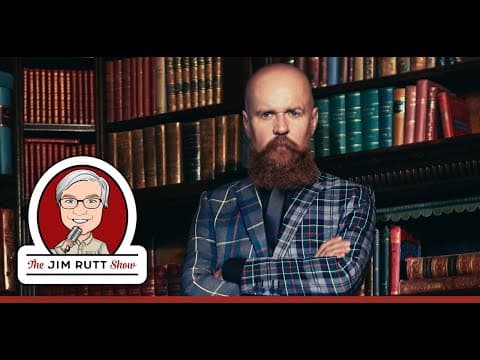
The Observer
Digital philosophy, syntheism, netocracy — post-capitalist ontology, process theology, and the social power of networked intelligence
The Translation
AI-assisted summaryFamiliar terms
Alexander Bard's concept of Attentionalism identifies a paradigm shift that does not abolish capitalism but supersedes it by recognizing a resource that capital cannot fully colonize: human attention, understood fundamentally as time. Capitalism's dependence on advertising arose from a structural need to manufacture demand for ever-expanding production. Advertising functioned under specific conditions — limited consumer alternatives and an undeveloped Cognitive Immune Response to persuasion. Bard argues that both conditions are now in terminal erosion, driven by information abundance and growing media literacy.
The historical parallel Bard deploys is deliberately provocative: slavery. The institution was not dismantled because it became unprofitable — it remained enormously so — but because moral consensus shifted and an alternative mode of production proved better suited to emerging technological conditions. Advertising, Bard contends, occupies an analogous position today. Its profitability is not in question; its legitimacy is. Tools like Perplexity, which deliver information without advertising intermediation, represent early structural evidence that post-advertising models are viable and preferred.
The figure at the center of this transition is the attentionalist — Bard's term for someone who treats their calendar as their primary asset and refuses algorithmic colonization of their cognitive resources. In Bard's broader vocabulary, this figure is the "theocrat": one who grasps that data is a form of capital, attention is a form of data, and therefore sovereignty over one's own attention constitutes sovereignty over one's own capital. The attentionalist is not necessarily wealthy but is cognitively sovereign — and that sovereignty, Bard argues, is becoming the defining marker of the emerging elite.