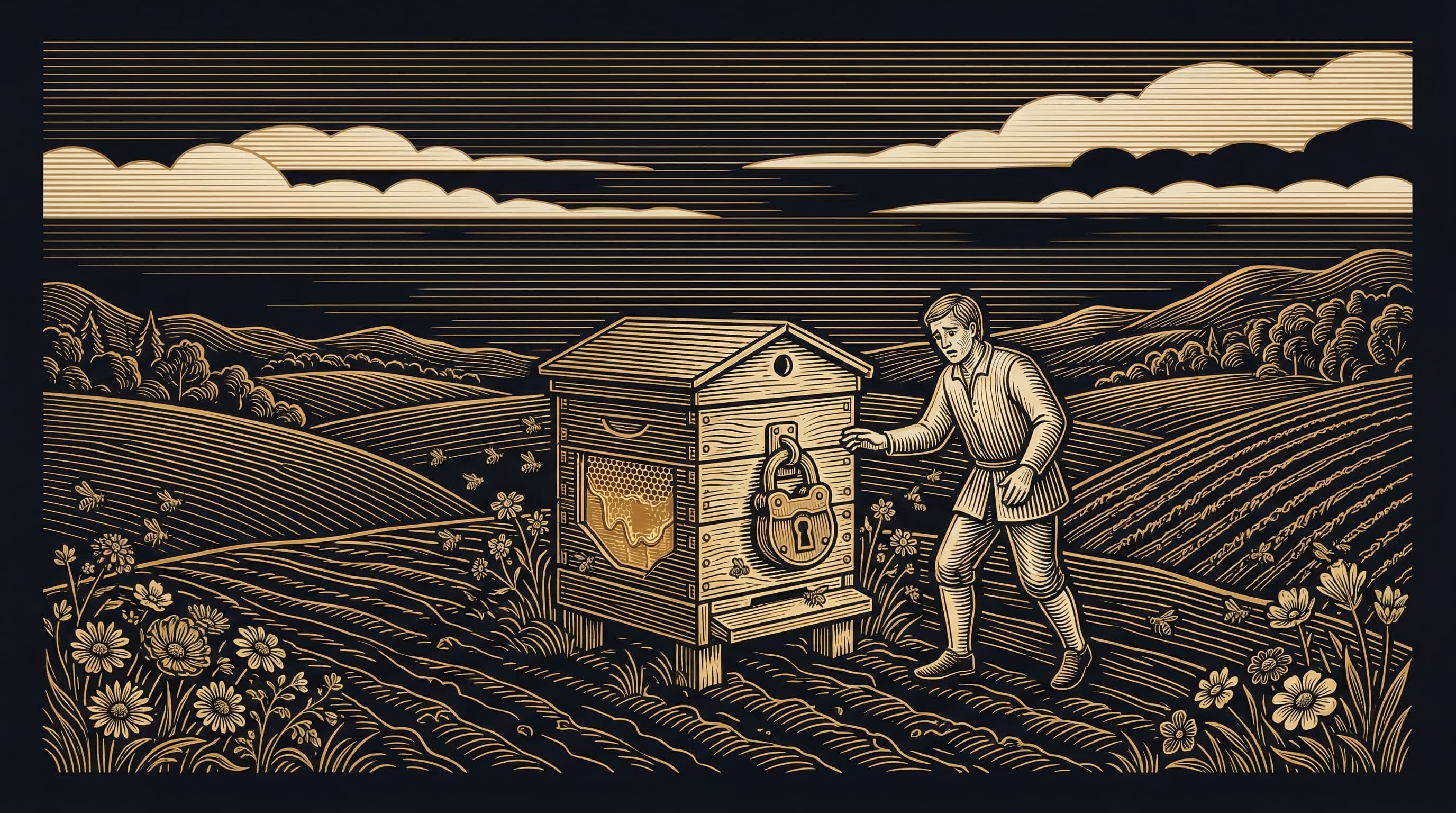
Corporate Authority and the Loss of Ownership
The state as the manufacturer’s bailiff
When you buy a device but the manufacturer controls what it can do, you haven't really bought it — you've rented it on their terms. Doctorow argues this isn't an inconvenience but a fundamental transfer of power, enforced by law.
The Translation
AI-assisted summaryFamiliar terms
The critique of platform enclosure is often reduced to antitrust concerns or debates about app store fees, but Doctorow's argument operates at a more fundamental level: the question of who holds sovereignty over a device after the point of sale. In the iPhone ecosystem, ownership is formally transferred to the consumer while effective control remains with the manufacturer. Apple determines which software may run, extracts rent from every transaction, and is legally shielded by provisions like the DMCA's anti-circumvention clause, which makes it a federal offense to bypass these restrictions. The consumer owns the hardware in a narrow property-law sense while being a tenant in the software environment.
This asymmetry is not incidental — it is the business model. And Doctorow's fictional extrapolations, most explicitly in Radicalized, use reductio ad absurdum scenarios (appliances that only accept authorized consumables) to defamiliarize an arrangement that has become invisible through normalization. The bread toaster that requires licensed bread is not a prediction; it is a clarifying mirror held up to existing practice.
What elevates this beyond standard tech criticism is the structural claim: that state enforcement of manufacturer control — through intellectual property law — represents a fundamental reAlignment of the relationship between individuals and their tools. The question is not whether walled gardens produce better user experiences, but whether the legal and technical architecture of platform technology encodes a permanent transfer of technological self-determination from users to corporations. This is the axis on which Doctorow's utopian and dystopian imaginaries turn: technology as an instrument of individual mastery versus technology as an instrument of corporate dominion.