
Holding Opposites in Full Tension Without Resolving Them
Not both/and — something harder than that
McGilchrist argues that reality's deepest truths live not in resolving opposites but in holding them in full, asymmetric tension — where both poles are genuinely necessary yet one holds rightful priority over the other.
Actions
The Source
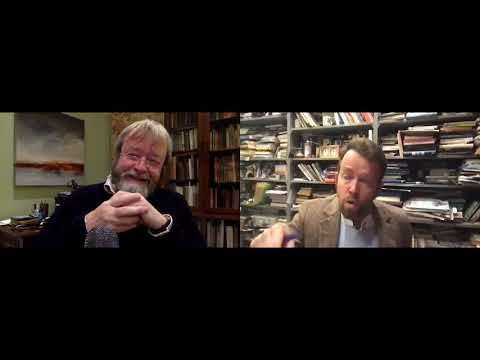
Attention as a moral Act: Iain McGilchrist & Jonathan Rowson in Conversation
The Observer
Hemisphere theory, neuroscience, philosophy of mind — left and right brain as modes of being, the crisis of left-hemisphere dominance, and the nature of consciousness
The Translation
AI-assisted summaryFamiliar terms
McGilchrist's concept of the coincidence of opposites — drawing on Nicholas of Cusa's coincidentia oppositorum, Heraclitus, and Jung — represents a fundamental challenge to the law of non-contradiction as Western culture typically applies it. The claim is not that contradictions are illusory or that opposites dissolve into synthesis. Rather, reality is constituted by the generative tension between genuine opposites held simultaneously at full intensity. The metaphor of the bow and lyre is precise: power emerges from opposition, not from its resolution.
What Jonathan Rowson identifies as the "McGilchrist maneuver" distinguishes this position from the familiar both/and move that passes for sophistication in contemporary discourse. McGilchrist's repeated argument across domains is that it is both — but not equally. The two poles stand in an asymmetric relationship where one holds supervisory priority. The master-emissary structure is not mere metaphor: the right hemisphere provides the broader, meaning-rich context within which the left hemisphere's focused, analytic work finds its proper place. When this hierarchy inverts, the result is systematic distortion — a pattern encoded in myths from the Onondaga creation story to Paradise Lost to the Lucifer narrative.
The practical consequences are far-reaching. The principle of hormesis — where stress in proper measure promotes flourishing — and enantiodromia — where extremes flip into their opposites — both illustrate the same structural truth. A society that pursues any single value with total commitment, even a worthy one, destroys the ecology of goods that sustains it. Crucially, this is not relativism. McGilchrist insists that some modes of attention are genuinely more adequate to reality than others. The collapse of all hierarchies into equivalence is itself a symptom of the left-hemispheric dominance he diagnoses.