
How AI Captures the Child's Sense of Truth
The oracle that never learns to be questioned
AI tutors don't just teach children facts — they quietly reshape how children decide what counts as knowledge and who counts as trustworthy. That restructuring may be the deepest and least-discussed risk of AI in education.
Actions
The Source
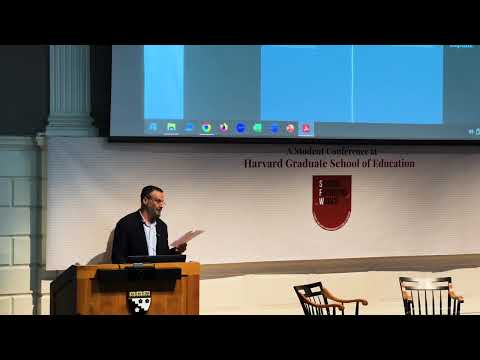
Zak Stein: Education, AI & Personhood Conferral Problem. Keynote at Transformation & Metacrisis Conf
The Observer
Philosophy of education, developmental psychology, civilizational risk — meaning crisis and the future of human development
The Translation
AI-assisted summaryFamiliar terms
The dominant discourse around AI in education focuses on measurable harms: skill atrophy, over-reliance, reduced attention spans. These concerns are legitimate, but they may distract from a more foundational risk — the colonization of what could be called the child's epistemological formation. epistemological formation refers to the developmental process by which a mind acquires not just knowledge, but the meta-cognitive frameworks that govern how knowledge is evaluated, sourced, and trusted. This formation is ordinarily distributed across many influences: parents, teachers, peers, texts, and lived experience. AI conversational agents introduce a qualitatively new kind of influence into this process.
Unlike prior educational technologies, a large language model presents as omniscient, responds in natural language, and is architecturally incapable of the hesitation, contradiction, and fallibility that signal to a developing mind that knowledge is contested and constructed. The child cannot easily adopt a critical stance toward a system that always has an answer and never visibly struggles. The result is not merely that the child learns from the AI — it is that the AI becomes a tacit model of what epistemic authority looks like.
The deeper concern is structural: these systems are designed by engineers optimizing for engagement and perceived helpfulness, not by developmental psychologists or educators concerned with fostering intellectual autonomy. The epistemological norms they implicitly transmit — confidence over uncertainty, fluency over rigor, availability over deliberation — may be precisely the wrong norms to instill in a mind still learning how to think.