
How Civilizations Recover Creative Power After Eras of Domination
Endurance was never the whole answer.
Civilizations trapped in nihilism and domination have always eventually rediscovered collective creative power. Danielle Layne argues the current sense of futility under AI and platform capitalism is not a fact of nature but a manufactured condition — and history shows the response is Renaissance, not resignation.
Actions
The Source
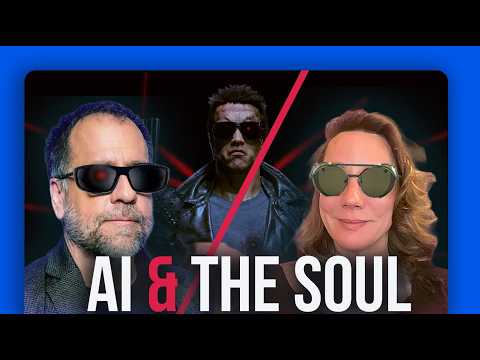
Artificial Intelligence & The World Soul: Danielle Layne & John Vervaeke | B4M #61
The Observer
Cognitive science, relevance realization, meaning crisis — 4E cognition, consciousness, and the recovery of wisdom
The Translation
AI-assisted summaryFamiliar terms
Danielle Layne articulates a recurring civilizational rhythm that reframes the current crisis of agency. Her historical analysis identifies a pattern: when political communities lose their capacity for self-determination — as Athens did under Hellenistic empire — philosophies of individual endurance emerge to fill the void. Stoicism, Epicureanism, and their analogues are not neutral wisdom traditions; they are adaptive responses to the loss of what Layne, drawing on Aristotelian and Neoplatonic vocabulary, calls dunamis — collective creative potential. These philosophies teach people to manage diminishment rather than recover power.
The parallel to the present is precise and unsettling. AI systems, platform capitalism, and the consolidation of technocratic authority are producing a specific affective condition: the conviction that resistance is futile, that the individual is negligible, that the trajectory of technological domination is inevitable. Layne's critical intervention is to name this not as a description of reality but as a political and spiritual operation — a manufactured fatalism that serves the interests of consolidation.
What makes Layne's framework generative rather than merely diagnostic is the historical completion of the pattern. Periods of radical relativism, sophistry, and nihilism have consistently given way to Renaissance — movements that recover the conviction that reality has depth, that knowledge exceeds information, and that human beings in concert possess creative capacities that systems of domination structurally need them to forget. The insight is that the feeling of futility is itself evidence that something is being suppressed, and that the suppression has never held permanently.