
How Reason and Myth Were Split — and How They Might Reunite
What if the story actually happened?
Modernity split reason from imagination, fact from myth, leaving us unable to find meaning in what we know or truth in what moves us. C.S. Lewis's conversion reveals that this split was never necessary — and that healing it is central to resolving the contemporary meaning crisis.
Actions
The Source
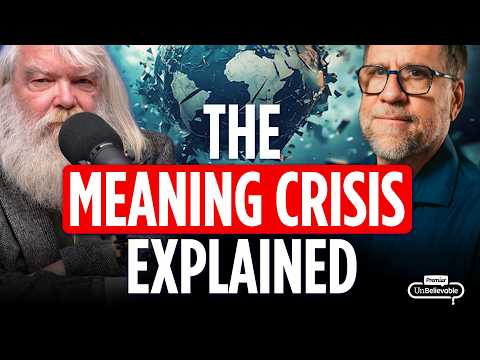
The Crisis of Meaning: John Vervaeke and Malcolm Guite hosted by John Nelson
The Observer
The Translation
AI-assisted summaryFamiliar terms
C.S. Lewis's pre-conversion self-diagnosis — that he loved the imaginary and found the real meaningless — names something far larger than one man's spiritual crisis. It identifies what might be called an epistemological apartheid at the heart of modernity: the rigid segregation of objective, verifiable fact from the domains of myth, art, and imagination. Under this regime, facts are granted epistemic authority but stripped of meaning, while myth and poetry are permitted emotional resonance but denied any purchase on reality. The result is a civilization that knows more and more while meaning less and less.
The intellectual breakthrough Tolkien offered Lewis was not a retreat from reason but a radical expansion of it. The proposal was precise: what if the archetypal myth of the dying and rising god — Balder, Adonis, Osiris — was on one occasion enacted not through the medium of language but through the medium of history itself? Such an event would be simultaneously available to rational-historical investigation and charged with the full mythic significance that gives death and resurrection their universal resonance. It would be fact that had not been drained of meaning, and myth that had not been exiled from reality.
This framework suggests that the contemporary Meaning crisis is not primarily a crisis of insufficient facts or insufficient stories, but a crisis of their artificial separation. Reason and imagination, the historical and the mythic, are not competing epistemologies but complementary organs of a single integrated knowing. The healing Lewis experienced points toward a broader epistemological reconciliation — one that does not require adopting his specific conclusions but does require recognizing that the split between fact and meaning was always a wound, never a discovery.