
Integrating Objective Science and Interior Wisdom
The sacred re-enters the house of reason
A complete science of the mind must integrate not just neuroscience and psychology, but also the rigorous interior investigations of contemplative traditions — spanning from behavioral conditioning all the way to enlightenment.
Actions
The Source
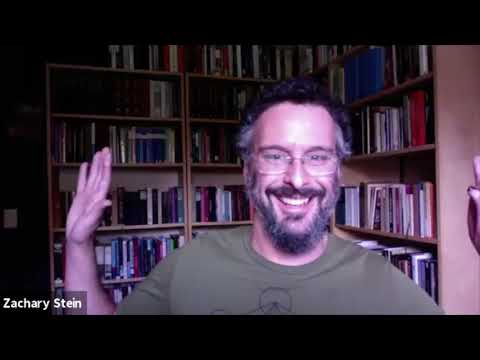
Towards a Metapsychology that is True to Transformation w/ Johnny V, Double G, and Zak Stein
The Observer
Philosophy of education, developmental psychology, civilizational risk — meaning crisis and the future of human development
The Translation
AI-assisted summaryFamiliar terms
Western psychology's institutionalization in the twentieth century involved a significant epistemic narrowing. By privileging third-person behavioral and cognitive methodologies, it effectively bracketed two entire domains of inquiry: the first-person phenomenological dimension of subjective experience, and the vast body of contemplative knowledge accumulated across traditions such as Vajrayana Buddhism, Kashmiri Shaivism, Aurobindo's integral yoga, and the Fourth Way. These traditions functioned as systematic, cumulative interior sciences — rigorous investigations into the structure, dynamics, and transformation of psyche conducted from within experience itself.
A genuinely integrative Metapsychology would need to hold four domains in coherent, non-reductive relationship: the objective natural sciences, the behavioral and cognitive sciences, first-person phenomenology, and the transcendent or transpersonal dimension theorized by contemplative traditions. The task is not to flatten these into a single explanatory register, but to map the structural relationships between them — to build an architecture that can coherently span from Operant Conditioning to states of non-dual awareness.
This project also carries a broader civilizational implication. The pre-modern world embedded the sacred within its entire framework of meaning; modernity performed a decisive Disenchantment; and any post-postmodern synthesis worthy of the name must theorize the re-entry of the sacred — not as regression, but as a genuine transcend-and-include movement that preserves scientific rigor while reopening the full vertical depth of human transformation.