
Suffering as Compass: Why Pain Points Away From Itself
Stop staring at the needle.
Suffering is not a problem to be eliminated but a compass pointing toward deeper understanding. The error is staring at the compass instead of following where it points — toward contentment, which arises not from ending suffering but from ceasing to resist it.
The Source
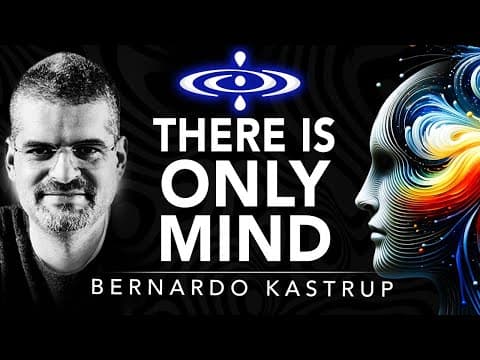
Bernardo Kastrup - The Radical View of Mind Only | Elevating Consciousness Podcast #46
The Observer
The Translation
AI-assisted summaryFamiliar terms
This perspective reframes suffering not as pathology but as epistemological instrument — perhaps the most potent one available to conscious beings. Without suffering, life defaults to an epicurean mode: pleasure-seeking, surface-dwelling, unreflective. Suffering arrests this momentum. It is the mechanism by which nature — or something transpersonal operating through the individual — forcibly redirects attention toward what matters. The claim is Ontological, not merely therapeutic: suffering has directional intent built into it.
The central error identified here is a misapprehension of suffering's function. When pain arrives, the near-universal response is to make its elimination the organizing principle of life. This is a category mistake. Suffering operates as a compass, indicating a direction away from misalignment. But rather than following the bearing, people fixate on the instrument itself — on the pain — and in doing so, they paradoxically construct an existence defined entirely by the thing they wish to escape. The more energy poured into resistance, the more suffering proliferates. This echoes insights from Stoic philosophy and Buddhist psychology alike, though the framing here is distinctly naturalistic and transpersonal rather than doctrinal.
The alternative proposed is contentment — carefully distinguished from happiness. Happiness is critiqued as a semi-delusional state predicated on controlling variables that lie fundamentally outside Human agency. Contentment, by contrast, is a profound relaxation into the actual unfolding of life as nature intends it, independent of egoic preference. It is available even within tragedy. The paradox at the heart of this insight is that contentment becomes accessible precisely when resistance to suffering ceases — when suffering is honored as one irreducible color in the palette of a fully lived life.