
The Path From Naïve Slogans to Earned Clarity
The gold that survives the furnace
Not all simple answers are equal. The simplicity that hasn't faced hard questions is worthless; the simplicity that has come through them and survived is everything. The difference between the two is the whole game.
Actions
The Source
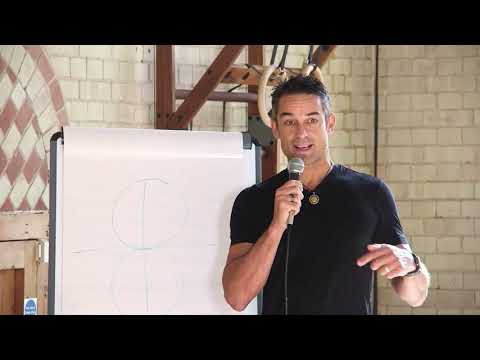
Collective Sensemaking in an Age of Existential Risk, Jamie Wheal
The Observer
Flow states, peak performance, ecstatic experience — neuroscience of consciousness, collective sensemaking, and civilizational meaning-making
The Translation
AI-assisted summaryFamiliar terms
The Holmes distinction between pre-complexity and post-complexity simplicity identifies one of the most consequential failure modes in intellectual and practical life. Pre-complexity simplicity is the default state of unreflective cognition: positions held with confidence precisely because they have not yet been stress-tested against the full weight of counterevidence, edge cases, and genuine moral tension. It presents as clarity but is actually the absence of encounter. Post-complexity simplicity, by contrast, is an epistemic achievement — the distilled residue of sustained engagement with contradiction, the point at which a thinker has genuinely held opposing forces in tension and arrived at something that still holds.
The distinction matters most where the stakes are highest. On questions of existential risk, civilizational direction, or large-scale coordination, the difference between a considered and an unconsidered position is not merely aesthetic. A more Considered position is categorically better — not because it is necessarily correct, but because it has been forged under conditions that give it a chance of being adequate to the actual complexity of the problem. Epistemic sovereignty — the right of individuals to reach their own conclusions — remains intact, but it does not flatten the qualitative difference between positions that have earned their simplicity and those that merely assume it.
The normative implication is that any serious intellectual or leadership practice should function as a structured passage: moving people from unreflective simplicity, through genuine engagement with complexity, toward earned clarity. What Holmes called the simplicity worth dying for is not a starting point but a destination. Short-circuiting that passage — through ideological comfort, social conformity, or Epistemic cowardice — is not a neutral choice. It is a failure of the highest order.