
Three Axioms Required Before Science Can Begin
The smallest house that holds everything
Jim Rutt proposes that all of science rests on exactly three unprovable but necessary commitments: reality exists roughly as we perceive it, the universe is not perfectly uniform, and it operates according to deep regularities. Everything else — emergence, consciousness, meaning — is downstream.
Actions
The Source
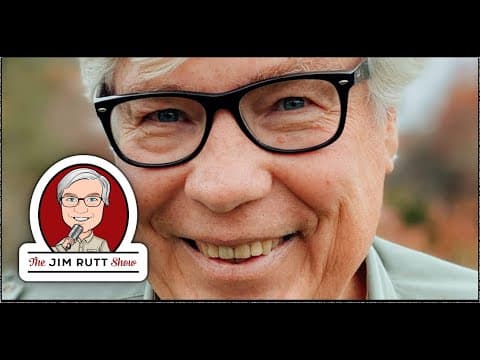
EP 328 Brendan Graham Dempsey Interviews Jim Rutt on Minimum Viable Metaphysics
The Observer
Complexity science, Game B, social technology — systems thinking and civilizational design from the Santa Fe Institute
The Translation
AI-assisted summaryFamiliar terms
Jim Rutt constructs what he calls a 'minimum viable metaphysics' — three axiomatic commitments that are not empirically derivable but are logically prerequisite to empiricism itself. The first, the Reality Principle, asserts that an external world exists and is approximately as perceived at the mezzo scale of human experience, from a grain of sand to the size of the sun. This is a pragmatic commitment, not a proof; its rejection leads to solipsism and the collapse of all inquiry. The second, the Asymmetry Principle, holds that perfect homogeneity is sterile — it produces no gradients, no structure, no Emergence. In a deterministic universe, initial asymmetry must be a brute fact; in a stochastic universe, quantum randomness may generate asymmetry spontaneously, making this condition less demanding.
The third, the Lawfulness Principle, asserts that the universe operates according to deep regularities. Rutt is careful to decouple lawfulness from determinism: a universe with genuine base-level randomness (as in the Copenhagen interpretation) can still be lawful if that randomness exhibits consistent statistical structure. The de Broglie-Bohm and Many Worlds interpretations preserve determinism, but the question remains open — and crucially, the Lawfulness Principle survives regardless of which interpretation holds. Randomness, if real, is simply one more feature of the lawful substrate, not a refutation of it.
The force of this framework lies in its minimalism. These three commitments are the necessary and sufficient metaphysical preconditions for measurement, reasoning, and science. Everything downstream — Emergence, consciousness, Teleology — rests on this foundation. Rutt is not building a metaphysical palace but identifying the smallest possible set of load-bearing assumptions.