
What 'Metacrisis' Actually Means and Why It Matters
The disease that names its own cure.
The metacrisis is not just many crises happening at once — it names the deeper delusion generating them all: a civilizational misalignment with reality that crisis thinking itself cannot fix, because crisis thinking is part of the problem.
Actions
The Source
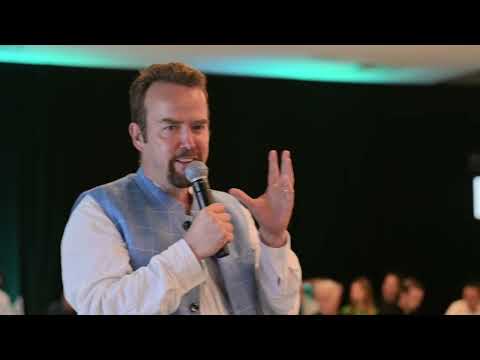
The Flip, the Formation, and the Fun: A response to the Metacrisis by Jonathan Rowson, in Montreal.
The Observer
Systems thinking, inner life, cultural transformation — sensemaking, dialogos, and the soul’s role in navigating civilizational crisis from Perspectiva
The Translation
AI-assisted summaryFamiliar terms
The metacrisis is a carefully constructed concept that resists collapse into more familiar terms. A polycrisis describes the entanglement and mutual amplification of simultaneous emergencies — ecological, economic, geopolitical. A permacrisis implies an indefinite horizon of dysfunction, which risks normalizing despair. The metacrisis, by contrast, identifies a singular-yet-plural root cause operating within and between all major crises: a multifaceted delusion, a civilizational misalignment with reality that manifests as failures of intelligibility, valuation, and relational integrity. The prefix 'meta' carries its full Greek range — not merely 'above' or 'across,' but critically 'after,' pointing toward what lies beyond the logic of crisis itself.
This framing draws on the original medical meaning of 'crisis' as a turning point requiring discernment rather than mere urgency. Modernity, on this account, has weaponized crisis as a governance mechanism — a mobilizing force that channels attention and resources without ever interrogating the generative conditions producing the emergencies. The deeper diagnosis is that modernity's spiritual and material substrates are simultaneously exhausted: inherited religious frameworks no longer sustain shared meaning, while the ecological base underwriting civilizational complexity is being systematically degraded through extraction rather than reciprocity.
The radical implication is that crisis thinking is itself part of the trap. To address the metacrisis is not to solve the next emergency more efficiently but to transcend the epistemological and existential habits that keep generating emergencies. This demands a shift from reactive problem-solving to something closer to collective discernment — a reorientation toward reality that modernity's own categories struggle to articulate.