
Why Computers Process But Cannot Understand: McGilchrist on AI and Meaning
Only a fellow sufferer can move you.
McGilchrist argues that computation manipulates symbols but never understands them, and that genuine creativity arises not from pattern-matching but from embodied, mortal, conscious life — making 'artificial intelligence' a misnomer for what is really artificial information processing.
Actions
The Source
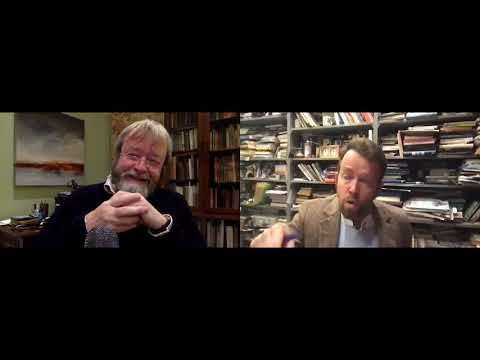
Attention as a moral Act: Iain McGilchrist & Jonathan Rowson in Conversation
The Observer
Hemisphere theory, neuroscience, philosophy of mind — left and right brain as modes of being, the crisis of left-hemisphere dominance, and the nature of consciousness
The Translation
AI-assisted summaryFamiliar terms
McGilchrist draws a consequential distinction between computation and understanding, mapping it onto his hemispheric model of cognition. Computation — the manipulation of symbols, the execution of procedures, the processing of information — is an essentially left-hemisphere activity. Understanding, by contrast, requires the right hemisphere's capacity to grasp overall import, contextual meaning, and lived significance. He introduces a further distinction between procedures and inhabited processes: a machine can execute the former, but only a conscious, embodied, mortal being can inhabit the latter. This leads him to reject the term "artificial intelligence" in favor of "artificial information processing," and to insist on a hierarchy — information, knowledge, understanding, wisdom — in which each level demands something computation cannot supply.
The creative domain sharpens the argument. Machine-generated compositions trained on Bach's complete works can reproduce genre-appropriate surface features — statistical regularities, harmonic conventions, structural patterns — yet they fail to produce the affective resonance that characterizes great art. McGilchrist locates the source of that resonance in embodiment, finitude, and consciousness: the reverberation between one mortal life and another. These are not incidental features of human creativity awaiting eventual replication; they are constitutive of it.
The position is philosophical rather than technophobic. It claims that the surface features of creative output — patterns, conventions, stylistic markers — are categorically distinct from the generative conditions of genuine creative achievement. A machine can produce artifacts that resemble art. What it cannot produce is the quality that emerges when a particular consciousness, constrained by a particular life, finds something true to articulate about the shared condition of being alive.