
Why Fixing Problems One at a Time Makes Everything Worse
The committee never reaches the nursing mother.
Most crisis responses break problems into separate categories and tackle them one by one, but the metacrisis is an entangled living system. The real work is not matching solutions to parsed-out problems but meeting the whole — tending to the intimate relational core from which all the categories arise.
Actions
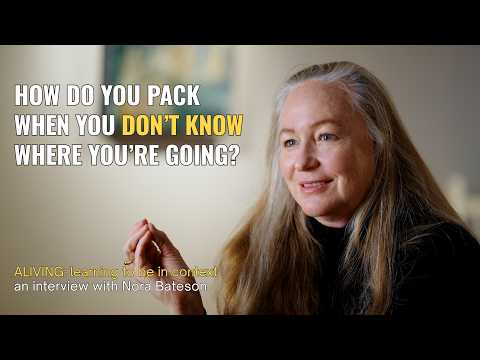
The Observer
Systems thinking, symmathesy, warm data — contextual mutual learning in living systems and the relational complexity beneath social and ecological crises
The Translation
AI-assisted summaryFamiliar terms
A sharp distinction emerges between two modes of institutional response to systemic crisis: matching and meeting. Matching is the dominant paradigm — decomposing the metacrisis into discrete problem domains, assigning specialized committees, and sequencing interventions as though the domains are independent. But the structural reality of entangled systems means that interventions in one domain routinely generate contradictions in others. Economic repair degrades ecology; educational reform destabilizes labor markets. These contradictions are not failures of execution — they are artifacts of the parsing itself. The problems are not separate; they are co-expressions of a single entangled living system.
To meet the metacrisis is to ask a fundamentally different question: what gestures, what forms of attention, express through all domains simultaneously? The Image of a woman nursing her baby serves as a powerful heuristic. Health, economics, ecology, justice, Intergenerational transmission, and the body-world relationship all converge in that single relational act. No institutional category owns it, yet it is the living substrate from which all categories draw their meaning. The conventional assumption — that tending to parsed-out categories will eventually serve the relational core — is precisely inverted. Tending to the relational core is what reorganizes the categories.
This inversion finds its deepest precedent in biological organization itself. Every organism nourishes capacities whose future relevance is unknown — a form of pre-adaptive generosity that sustains evolutionary possibility. The model for meeting rather than matching is not hidden; it is ubiquitous. The inability to perceive it is not a mystery of nature but a consequence of trained perception, a disciplinary blindness that mistakes its own parsing for the structure of reality.