
Why Information Abundance Produces Wisdom Famine
Where did you go for wisdom? Anxious silence.
Modern civilization drowns in information yet starves for wisdom — and wisdom cannot be accumulated like data. It requires communal practices, trusted role models, and ongoing confrontation with self-deception, none of which can be privatized or individualized without destroying the very thing sought.
Actions
The Source
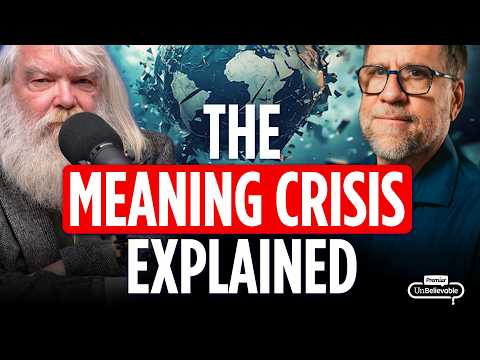
The Crisis of Meaning: John Vervaeke and Malcolm Guite hosted by John Nelson
The Observer
Cognitive science, relevance realization, meaning crisis — 4E cognition, consciousness, and the recovery of wisdom
The Translation
AI-assisted summaryFamiliar terms
T.S. Eliot's lament in the Choruses from the Rock — the loss of knowledge in information, and wisdom in knowledge — is not merely poetic nostalgia but a precise civilizational diagnosis. The information-knowledge-wisdom hierarchy is not a smooth continuum of increasing sophistication; each transition demands a qualitatively different capacity. Information requires filtering; knowledge requires integration; wisdom requires the disciplined, recursive confrontation with self-deception. As John Vervaeke argues, the very cognitive processes that grant us Relevance realization — the ability to ignore irrelevant data — simultaneously render us perpetually vulnerable to illusion. Self-deception does not terminate at cognitive maturity. The child-to-adult transformation that discloses certain truths is not the final such transformation; the adult-to-sage transition is structurally analogous and equally necessary.
The Meaning crisis, in Vervaeke's framing, is precisely the absence of legitimate wisdom ecologies. When students can identify sources for information and knowledge but fall silent when asked about wisdom, they reveal a cultural vacuum. Wisdom is not propositional but participatory and transformative — imaginal, mythical, narrative in nature. It requires binding: commitment to role models, communities, and ecologies of practice whose operations one does not yet fully comprehend but trusts enough to undergo.
This is why the "spiritual but not religious" stance constitutes a category mistake — an attempt to privatize Religio, the very binding that makes wisdom transmission possible. Malcolm Guite's brewery analogy exposes the incoherence, but the impulse deserves sympathy: it is a symptom of the trust apocalypse affecting all institutions, not religion alone. Trust is rebuilt through credibility-enhancing displays — watching others embody what they profess — not through credentialing or legislation. Idiosyncratic spiritual vocabularies foreclose communal correction and render truth claims uncheckable. No panacea practice substitutes for a living tradition embedded in community.