
Why Secular Frameworks Cannot Sustain Civilizational Commitment to Intrinsic Value
Things worth dying for cannot be peer-reviewed.
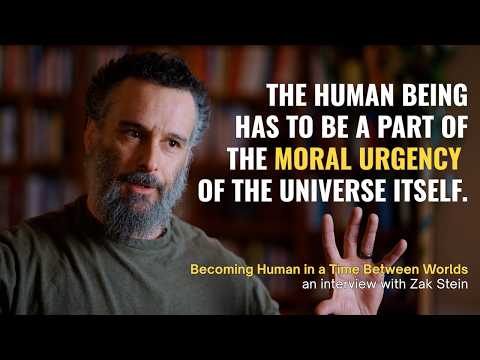
Secular frameworks cannot generate the language of intrinsic value needed to sustain civilizational commitment. The return to religion — not vague spirituality — may be the only way to recover resources for strong moral conviction before fundamentalists claim that territory by default.
Actions
The Observer
Philosophy of education, developmental psychology, civilizational risk — meaning crisis and the future of human development
The Translation
AI-assisted summaryFamiliar terms
Postmodernity successfully dismantled modernity's claim that its core values — human rights, dignity, equality — were self-evident. But it offered no replacement foundation, leaving contemporary civilization in a peculiar bind: it holds values it can no longer philosophically justify. Secular humanist and scientific frameworks, for all their descriptive power, lack the normative resources to ground strong claims about intrinsic value. They cannot furnish the language that says some things matter more than survival itself — precisely the language required to mobilize genuine political will, solidarity, and sacrifice.
This is the context in which the return to religion — deliberately distinguished from spirituality — becomes philosophically significant. Drawing on Habermas's argument about the "untapped semantic potentials" in religious traditions, this perspective holds that religious language carries irreducible capacities for articulating commitment, obligation, and the sacred that scientific discourse cannot replicate. This is not an anti-scientific position but an anti-reductionist one: the claim is that a civilization cannot sustain itself on empirical facts alone when what it needs is a framework for strong normative commitment.
The political stakes are concrete. If the educated classes abandon the terrain of ultimate value to fundamentalists — treating all non-empirical discourse as intellectually beneath them — then fundamentalism wins by default, because it is the only remaining voice speaking with conviction about what is non-negotiable. The task, then, is a difficult act of recovery: to retrieve from religious traditions their genuine capacity to name what is invaluable and to ground civilizational commitment, while allowing historically contingent doctrinal elements to fall away.